Why summer shows you more
Snow is a blanket, and in winter it is on
Winter covers the glacier. Summer exposes it. Both are good; they are not the same.
A glacier has two very different appearances and they alternate annually.
In winter, snow accumulates on the surface. It fills the runnels, bridges the smaller crevasses and covers the ash bands, and what you walk on is a smooth white field with the glacier somewhere underneath. It looks magnificent in photographs and it hides the structure completely. It also means guides keep routes shorter and more conservative, because a snow-bridged crevasse is exactly the hazard they are paid to avoid.
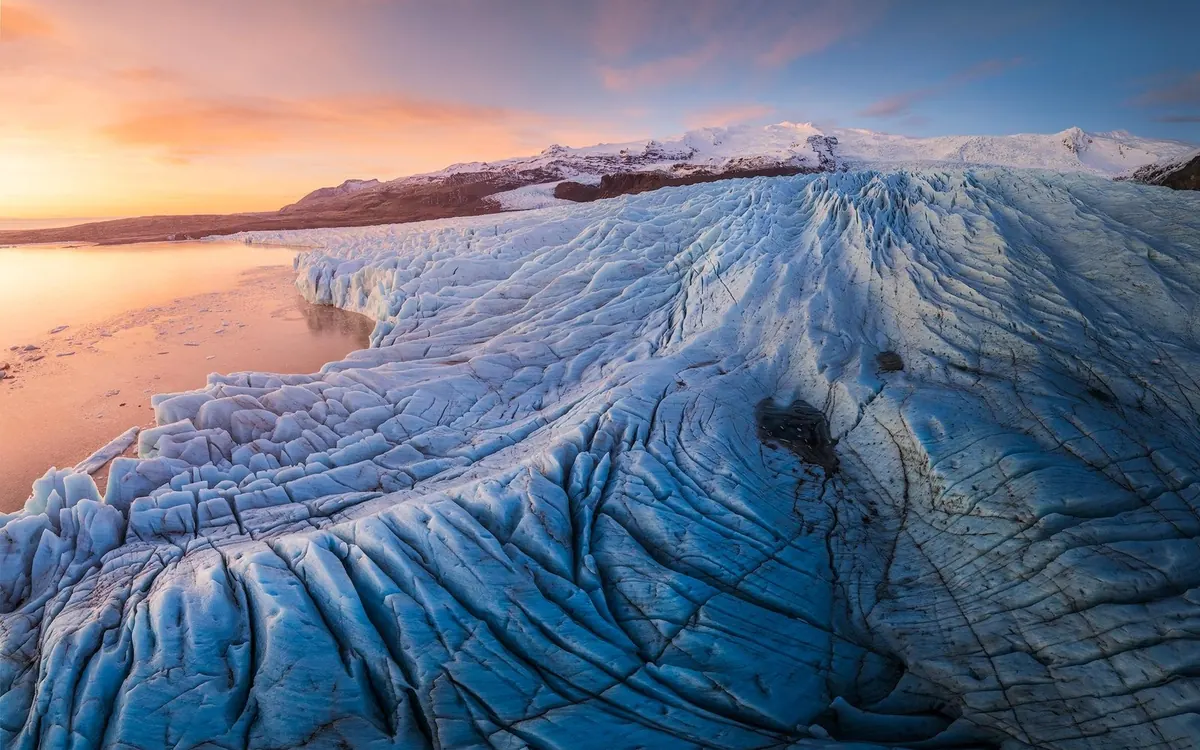
In summer, that snow melts off and the bare ice is exposed. Now you can see how the glacier is built: the parallel runnels cut by meltwater, the blue channels running through them, the black ash bands from past eruptions, and the crevasses open and visible with their blue depths. Guides can take longer lines because they can see what they are walking on.
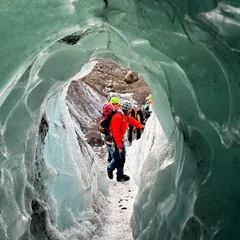
That is the whole argument, and it surprises people every time: if the ice is what you came for, come in summer. If the aurora and the ice caves are what you came for, come in winter and do a shorter walk while you are there.